


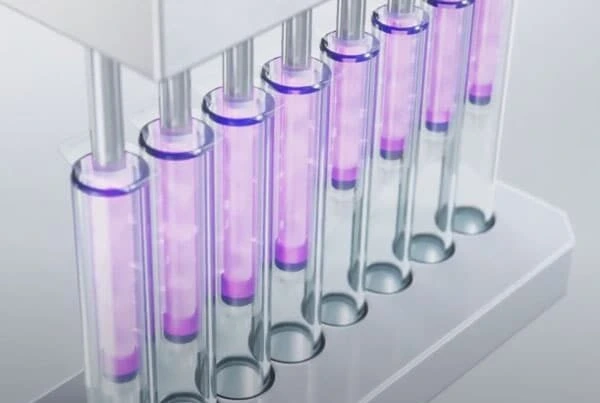
RotoVac
Vacuum Plasma Treater | Drum design
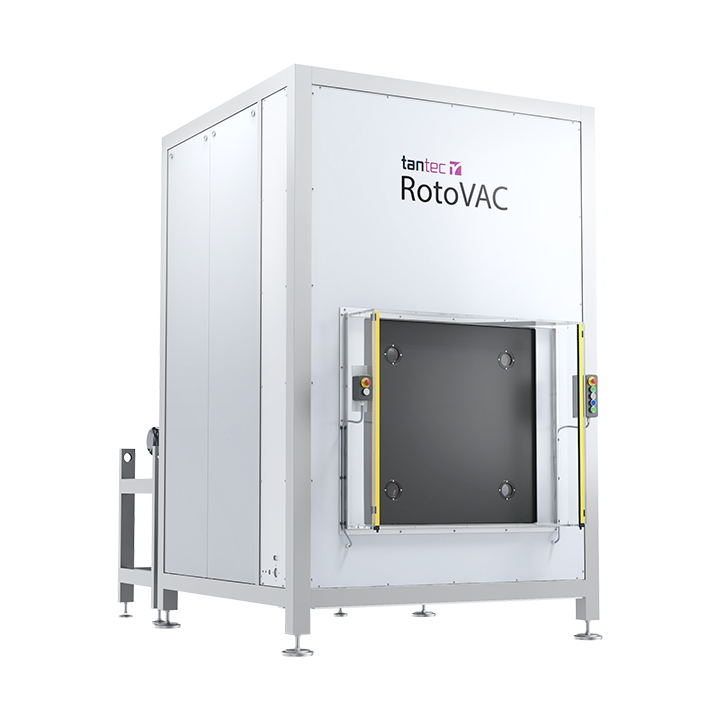

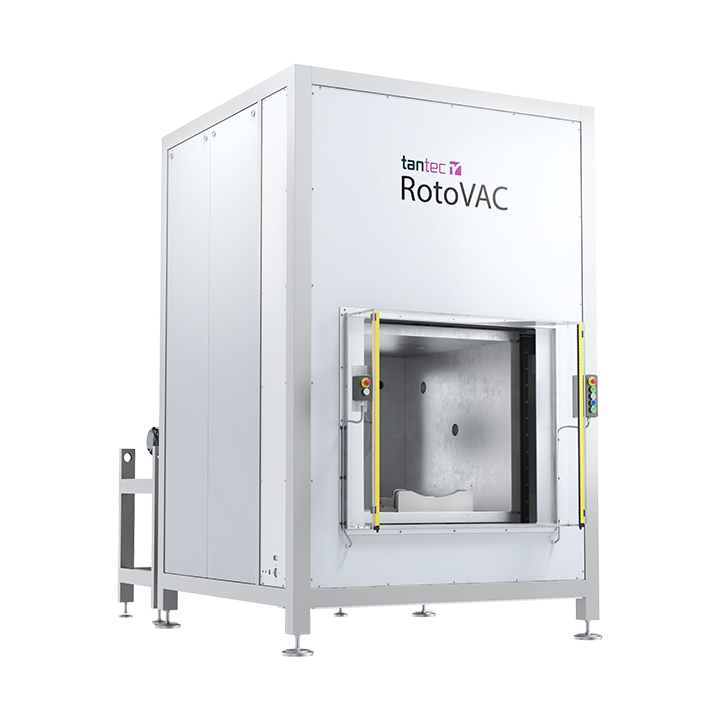

RotoVac
Vacuum Plasma Treater | Drum design
RotoVAC product description
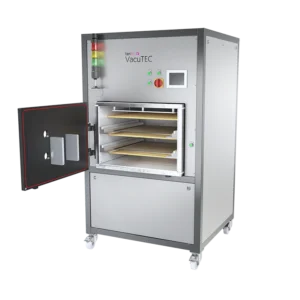
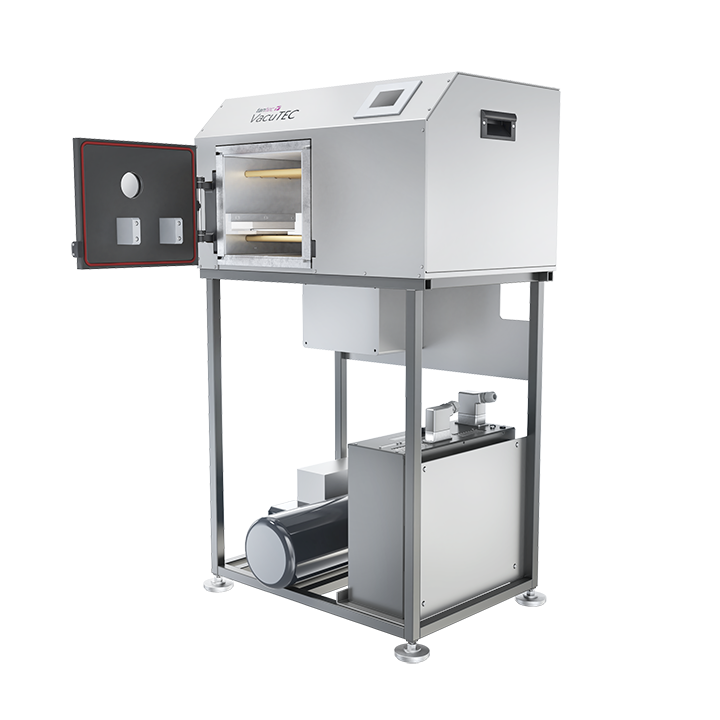
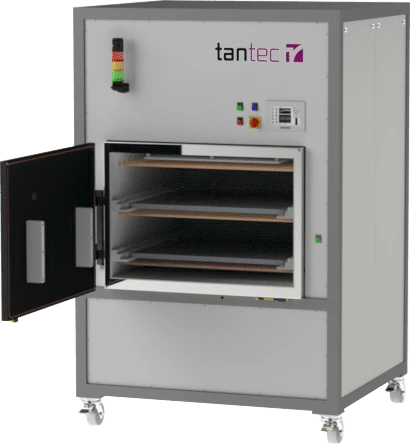
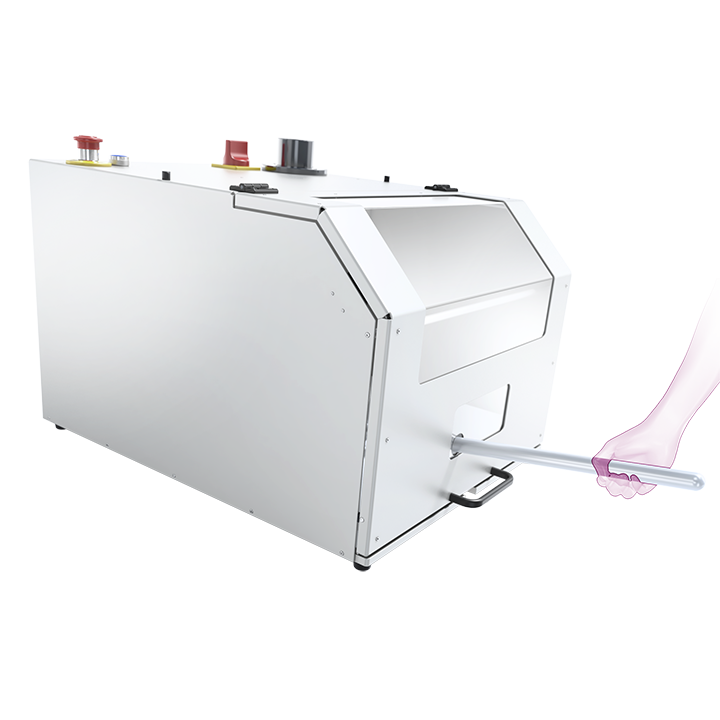
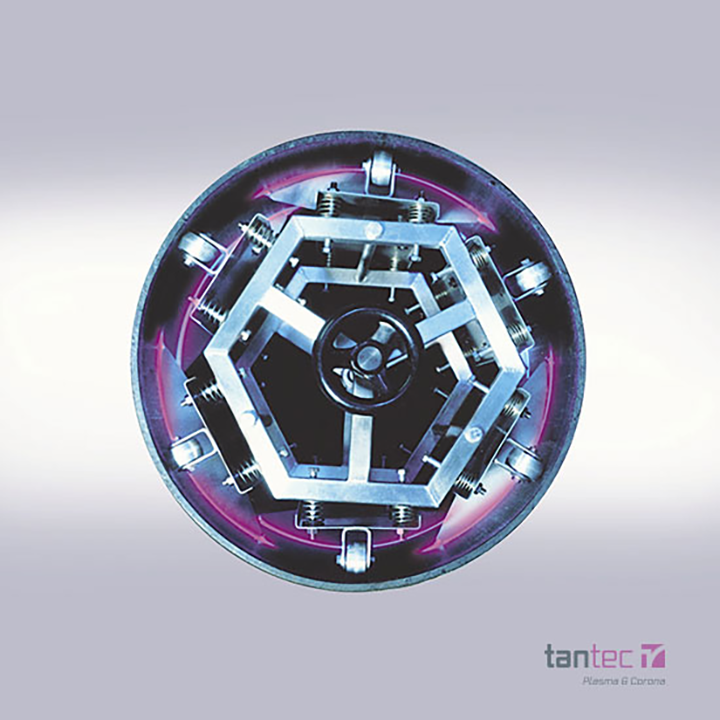
Tantec RotoVAC vacuum plasma treater is designed for plasma treatment of small injection moulded plastic parts, without the need to place them in a jig or use complicated handling systems.
With the RotoVAC drum design, simply fill the drum and place it in the vacuum chamber. The rotation will ensure that all parts are treated.
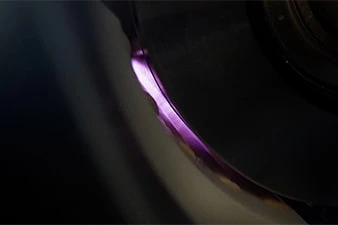
In the treating chamber a vacuum builds up to between 0,1 and 4 mbar before an electrical discharge is created through the integrated plasma electrode. Treatment cycle times are often short, between 20-180 seconds depending on the material and its formulation.
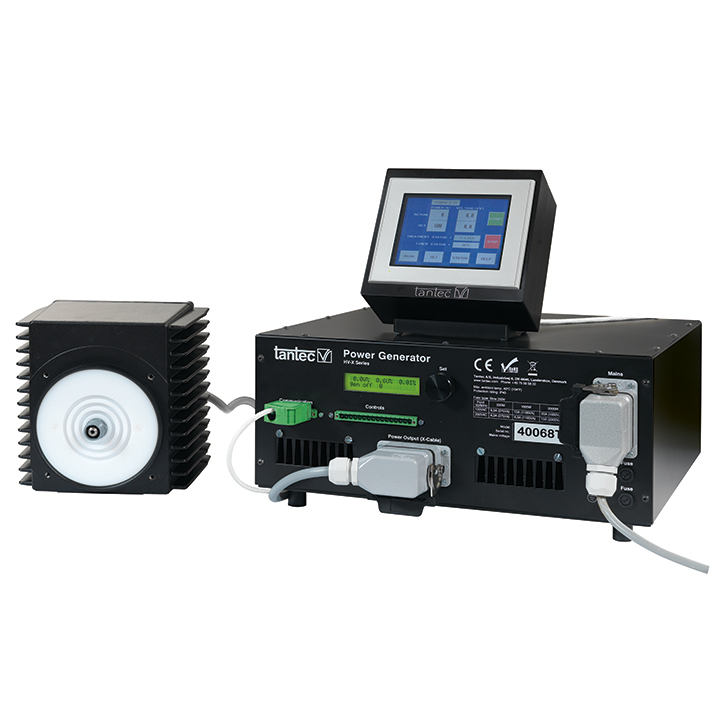
The RotoVAC plasma treater is appreciated for its simplicity of operation, reliability in production and fast process speed. Treating gasses such as argon and oxygen can be applied, but in most cases this is not necessary due to the high power exposed by the plasma discharge. RotoVAC uses the advanced Tantec power generator HV-X series as power supply, and specially designed plasma transformers to provide voltage to the plasma electrodes.
The rotating drum ensures that all parts are equally treated. The concept includes an extra drum which can be loaded during treatment and simply exchanged with the one in use when the batch is completed.

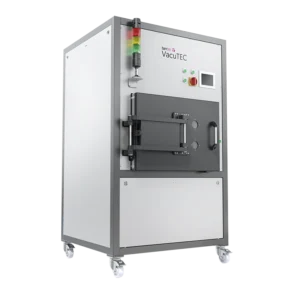
Standard RotoVAC
This product is manufactured as a standard machine to match common production requirements. It offers a proven configuration with defined footprint, treatment concept and machine interface, making it easy to integrate into industrial production.
Customized RotoVAC
This product can be customized to fit your production. Tantec can adapt the solution to your part geometry, process requirements and production flow, including footprint, cycle time, chamber size, part capacity and machine interface.
Find out before adhesion problems reach production
Tantec offers free sample evaluation and application testing performed by our experienced surface treatment experts. We test your materials under real-world process conditions to help determine the appropriate corona or atmospheric plasma solution for your specific application. Don’t guess at the treatment level your application needs. Let Tantec test your actual samples and provide data-driven recommendations for achieving strong, reliable, repeatable adhesion.

RotoVAC Technical specifications
| FEATURES: | |
| Easy to install and use | Connect to mains power and compressed air. |
| Fast treatment times | High power impact enables treatment times from 20-180 seconds, depending on material. |
| Standard or customised chambers | Chamber and drum size can be designed to most applications. Many available as standard. |
| Vacuum level | The plasma discharge is active from 0,1-4 mbar depending on application. |
| Process gas | Process gasses such as oxygen and argon can be used, but in mostcases it is not necessary. |
| Process control | The entire plasma process is controlled by the HV-X generator and PLC unit. All parameters are displayed through the touch panel. (Standard – Proface). |
| Cost efficient surface treatment | Due to the low power and no need of special treatment gasses the unit is a very cost efficient solution for improving surface wettability and adhesion. |
| Vacuum pressure plasma | Enables treatment of both conductive and non-conductive surfaces. |
| Technical Specifications | RotoVAC Vacuum Plasma Treater |
| Mains voltage and frequency | 230 VAC or 480 VAC 3Ph. |
| Output voltage/plasma power | Max. 3,5kV/max. 2000 Watt |
| Power supply | HV-X plasma generator series |
| Compressed air inlet | 5–6 bar dry and clean |
| Process gas | Standard: air, oxygen, argon, nitrogen on request |
| Vacuum pump capacity in m³/min. | 15 to 240 m³/min., depending on size of vacuum chamber |
| Vacuum level | 0,1–4 mbar |
| Evacuation time, typical | 15-60 seconds, depending on chamber size and pump capacity |
| Plasma treatment time, typical | 20–180 seconds, depending on material |
| Control and connectivity | Complete with touch panel. (Standard – Proface) |
| Regulation compliance | CE – RoHs – WEEE |
FAQ
What is RotoVAC used for?
RotoVAC is a vacuum plasma treater with a rotating drum for rotationally molded plastic parts and 3D parts. It helps you create a more reliable process before the next production, assembly or quality step.
How does RotoVAC work?
RotoVAC uses vacuum plasma treatment inside a chamber, where the drum rotates during the process. This ensures that the surface or component is treated in a controlled and repeatable way.
Which materials or components can be used with RotoVAC?
RotoVAC is suitable for rotomolded items, small plastic parts and 3D parts. The final setup depends on the material, geometry and production requirements.
Can RotoVAC be integrated into production?
Yes. RotoVAC can be used as a chamber-based treatment step before bonding, coating or printing. This makes it suitable for both new production concepts and upgrades of existing processes.
What production challenge does RotoVAC help solve?
RotoVAC helps solve challenges related to low surface energy, poor wetting and unreliable adhesion. It supports a more stable result before the next production step.
How does RotoVAC support consistent quality?
RotoVAC supports consistent quality through uniform activation on complex surfaces and improved adhesion quality. This helps reduce variation and makes the process easier to document and repeat.
What are the key advantages of RotoVAC?
Key advantages include chamber treatment for large parts and controlled vacuum plasma processing. These features make RotoVAC practical for industrial use where uptime, control and repeatability matter.
When should you consider RotoVAC?
You should consider RotoVAC when adhesion, printing, coating, bonding or surface preparation is critical to product quality. It is especially relevant when untreated surfaces create unstable results.
Is RotoVAC an environmentally friendly solution?
RotoVAC supports a cleaner production process by reducing the use of chemical pre-treatment or primers where the application allows it. The process is dry, controlled and repeatable.
Can RotoVAC be delivered as a standard or customized solution?
Yes. Tantec can provide RotoVAC as a standard solution or adapt it to your product, material, geometry, line speed and process requirements. The final configuration is selected together with you.