



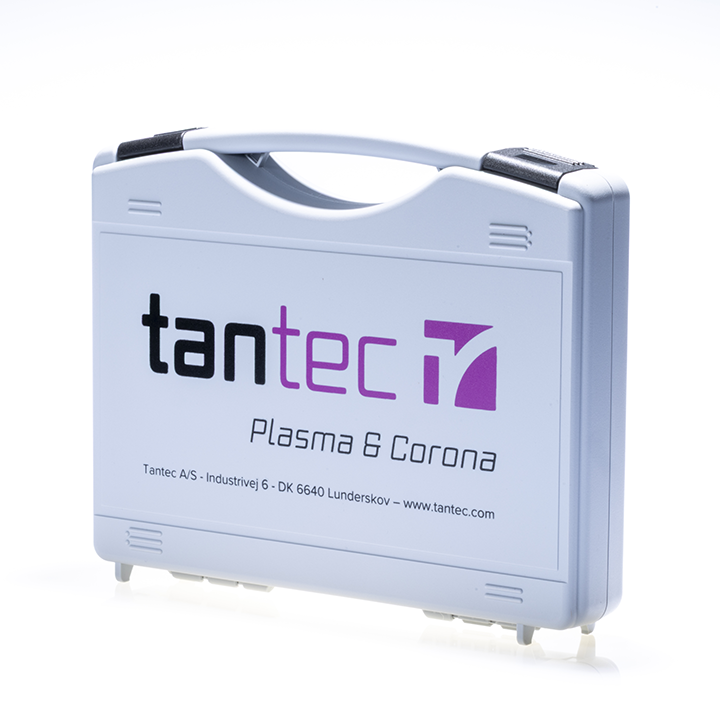
Dyne Test Kit
Equipment and Guide to Surface Energy Measurement
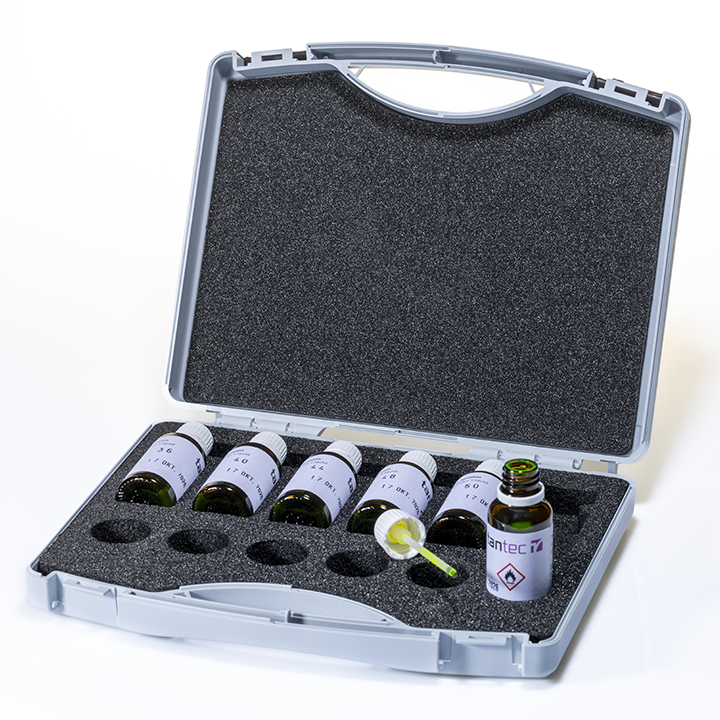
Dyne Test Kit
Equipment and Guide to Surface Energy Measurement
Dyne Test product description
A dyne level is a measurement of a material’s surface energy expressed in dynes per centimeter. It indicates how well liquids will wet or adhere to a surface. Higher dyne levels mean better wettability and adhesion, which are crucial in printing, coating, and bonding processes.
In order to determine the surface energy of a material, engineers often utilize the dyne test, also known as the ink method. This testing method is based on the ASTM/ISO 9277 standard for measuring the surface energy. It can be performed using various specialized equipment, such as dyne pens.
Here you’ll get a brief overview of how the dyne test works and what you can expect from the results.
Determining surface energy with Dyne testing
Determining the surface energy can be achieved by measuring contact angle or by using Tantec surface energy test inks – DyneTEC.
Use Tantec´s equipment for measurement of the surface energy. Another name for Dyne test ink, is also “Corona pens”.
This form of measurement is based on the ASTM/ISO method for measuring the surface energy of polypropylene film.
When the test ink is applied to the surface, it will either form a continuous film on the surface or pull back into small droplets.
If the liquid remains as a film for at least 3 seconds, the substrate will have a minimum surface energy of that ink value.
Should the ink reticulate, the surface energy of the substrate is lower than that of the ink.
The exact surface energy can be determined by applying a range of increasing or decreasing values of this ink.
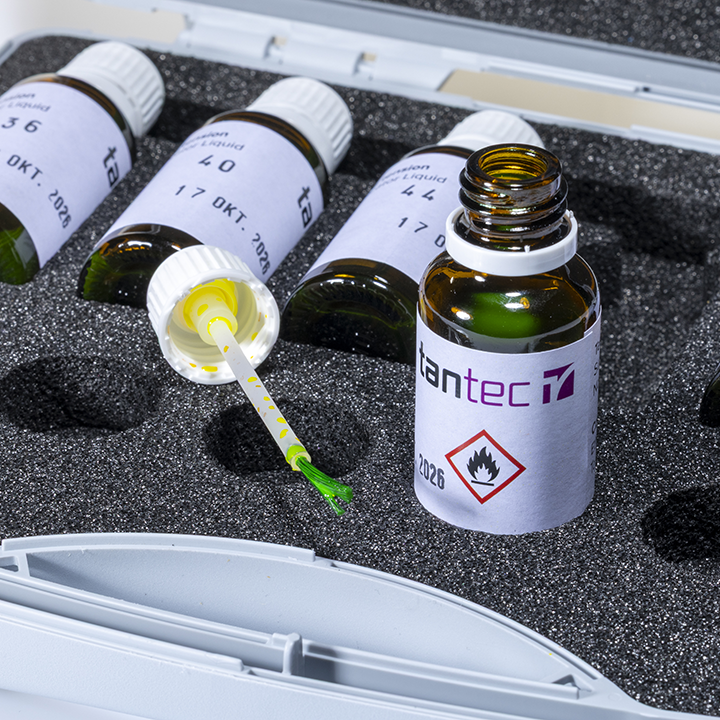
The inks are available in 2 mN/m increments from 30-58 mN/m – including 72 mN/m and is supplied in 20 ml glass bottles with integral brush applicator.
How Does the Dyne Test Kit Work?
The dyne test is performed by applying a small amount of liquid dyne ink using dyne pens to the material’s surface. For the purposes of this test, the liquid will either form a continuous film on the surface or pull back into small droplets. If the liquid remains in film form for at least three seconds, it indicates that the substrate has a minimum surface energy that is equal to the value of the chosen dyne ink. However, if the liquid reticulates (i.e. forms into small droplets), it indicates that the substrate’s surface energy is lower than that of the chosen dyne ink.
What is a dyne pen?
A dyne pen is a handheld device used to test the surface energy of a material. It works by applying a small amount of liquid dyne ink to the material’s surface. If the liquid remains in film form for at least three seconds, it indicates that the substrate has a minimum surface energy that is equal to the value of the chosen dyne ink. However, if the liquid reticulates (forms into small droplets), it indicates that the substrate’s surface energy is lower than that of the chosen dyne ink.
Choosing the Right Dyne Ink for Your Application
When selecting a dyne ink for your application, it’s important to consider both compatibility and cure speed. For example, some inks are only compatible with certain substrates (e.g. plastics), while others may offer faster cure times than others. Additionally, it’s worth noting that different inks offer different values; therefore, it’s important to select an ink with a value that is appropriate for your needs. You can apply the dyne ink with a dyne pen.
Understanding the Role of Markers in Dyne Testing
Markers play a critical role in the dyne testing process, as they provide an accurate measurement of the surface energy of a material. The marker, or dyne ink, is applied to the material’s surface using a dyne pen or similar device. The behavior of the marker on the surface (i.e. whether it forms a continuous film or reticulates) indicates the surface energy of the material.
Choosing the right marker is important to ensure accurate and reliable results. Markers are available in a range of different dyne levels, and the appropriate marker to use will depend on the surface energy of the material being tested. It’s important to select a marker with a dyne level that is appropriate for your needs, as using the wrong marker can result in inaccurate results.
Markers can also be affected by factors such as contamination, humidity, and temperature. To ensure accurate results, it’s important to store markers properly and to use them within their specified shelf life. It’s also important to perform the dyne test in a controlled environment to minimize the impact of external factors.
In summary, markers play a crucial role in the dyne testing process, providing a quick and easy way to measure the surface energy of materials. By selecting the appropriate marker and taking steps to minimize external factors, engineers can ensure accurate and reliable results from the dyne test.
Dyne Test Results – What Do They Mean?
As we mentioned above, one of the key benefits of utilizing the dyne test is that it provides valuable insights into material compatibility. In other words, by understanding a material’s surface energy, you can get a better idea of which adhesives, coatings, etc. will work best with that material. Additionally, dyne test results can be used to troubleshoot issues related to poor bonding or adhesion.
Contamination and Its Effect on Dyne Test Results
Contamination is a common issue that can affect the accuracy of dyne test results. Contaminants can prevent the dyne ink from properly wetting the surface, leading to inaccurate results. Some common sources of contamination include oils, grease, dirt, dust, and fingerprints.
To prevent contamination from affecting your dyne test results, it’s important to thoroughly clean and dry the surface before testing. This can be done using a solvent such as an isopropyl alcohol or a specialized cleaning solution. It’s also important to avoid touching the surface with bare hands, as this can transfer oils and other contaminants.
In some cases, it may be necessary to use a more specialized cleaning method, such as plasma treatment or corona treatment, to remove stubborn contaminants.
What are dyne pens used for?
Dyne pens are used to measure surface wetting or surface energy. The Dyne Test Pen is a simple method of determining the surface energy of most polymer-based materials.
The test pen works by measuring the force required to draw a liquid through a small hole in the pen tip. The higher the surface tension of the liquid, the more force is required. This force is then converted into a dyne-level reading.
Dyne pens are commonly used to test the suitability of materials for printing, coating, or laminating. They can also be used to test the cleanliness of surfaces prior to bonding or sealing.
How to use dyne pens?
Using a dyne pen is straightforward. First, unscrew the cap and remove the nib. Next, dip the nib into the liquid to be tested. Finally, screw the cap back on and press the tip of the pen onto the surface to be tested.
The dyne level will be indicated by a colored band that appears on the surface. The higher the dyne level, the more force is required to draw the liquid through the hole in the nib.
What do dyne test results mean?
Dyne test results can be used to determine the suitability of a material for printing, coating, or laminating. A dyne level of 32 dynes/cm or higher is typically required for these applications.
Dyne test results can also be used to determine the cleanliness of a surface prior to bonding or sealing. A dyne level of 10 dynes/cm or less indicates that the surface is clean and suitable for these applications.
Conclusion
Overall, the dyne test is an incredibly useful tool for technicians who need to evaluate material compatibility or troubleshoot adhesion-related issues. When performed correctly, this testing method can provide valuable insights that can save time and money in the long run.
Find out before adhesion problems reach production
Tantec offers free sample evaluation and application testing performed by our experienced surface treatment experts. We test your materials under real-world process conditions to help determine the appropriate corona or atmospheric plasma solution for your specific application. Don't guess at the treatment level your application needs. Let Tantec test your actual samples and provide data-driven recommendations for achieving strong, reliable, repeatable adhesion.
Dyne Kit technical specifications
| FEATURES: | |
| Easy to use | Simply apply the ink using the integrated brush applicator. |
| ASTM and ISO norms | Using the ASTM/ISO norminated liquids ensures full traceability. |
| Available from 30-72 mN/m | All values from 30-58 + 72 mN/m available. |
| Fast testing process | Immediate results of testing “measurement” within 3 seconds. |
| Non-toxic liquids | Tantec developed reference liquids available. (Not for use on PP). |
| Technical Specifications | DyneTEC |
| Bottle size | 20 ml |
| Liquid, ISO/ASTM | Toxic liquid |
| Liquid, Tantec | Flammable, non-toxic (not for use on PP) |
| Ink lifetime | Up to 12 months |
| DyneTEC test kit | Includes kit with 6 bottles (standard 36-40-44-48-50-56 mM/m) |
| Shipment instructions | Dangerous goods in excepted quantities (Non-toxic) |
FAQ
What is Dyne test used for?
Dyne test is a method for measuring surface energy after plasma or corona treatment.
How does Dyne test work?
Dyne test uses surface energy testing with dyne liquids or pens. The process is controlled so the surface or component can be treated, checked or prepared with repeatable results.
Why is surface energy important?
Higher surface energy improves wettability, which helps inks, coatings and adhesives bond more reliably to the surface.
What happens if the dyne ink pulls back into droplets?
If the ink reticulates or forms droplets, the surface energy is lower than the selected dyne value.
When should dyne testing be used?
Dyne testing is often used before and after corona or plasma treatment to verify whether the surface has reached the required surface energy.
Is dyne testing easy to perform?
DyneTEC is easy to use with an integrated brush applicator and gives a fast indication of surface energy within seconds.