Quality Monitoring for Surface Treatment and Leak Detection
How do you know whether a component has been treated correctly or whether a microscopic defect has passed unnoticed?
Visual inspection is rarely enough.
Tantec develops quality monitoring and testing solutions that help manufacturers:
- Detect microholes and cracks in non-conductive components
- Monitor corona and plasma discharge during treatment
- Evaluate surface wettability before bonding, printing or coating
- Generate pass/fail signals for automated production
- Support process control, documentation and traceability
Explore LeakTEC, MonTEC and DyneTEC to find the right control method for your process.
Three Ways to Control Your Process
The right quality control method depends on what you need to verify. The three methods measure different parts of the production process and can be used individually or combined.
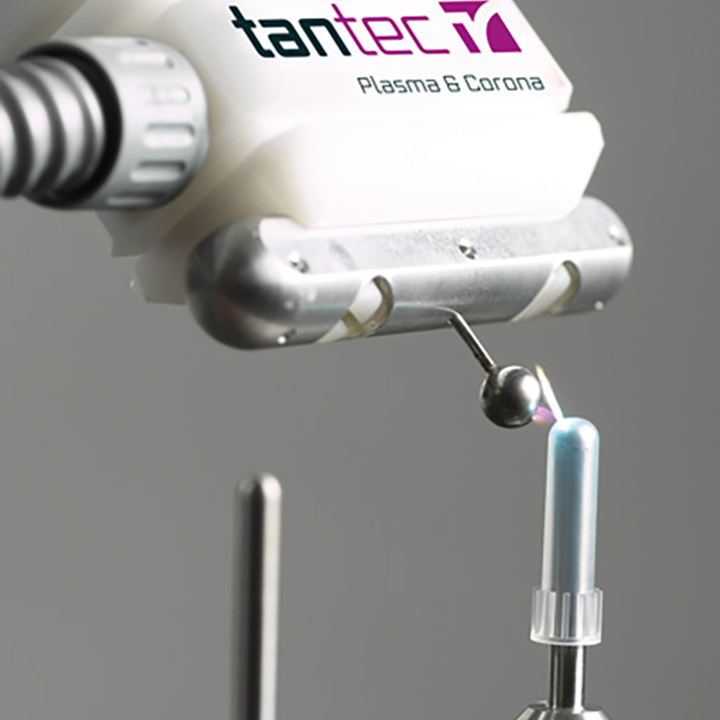
LeakTEC Microleak Detection
Non-destructive detection of microholes and cracks in non-conductive, single-layer components. High DC voltage reveals defects – depending on the setup, holes below 3 microns – with a clear pass/fail signal.
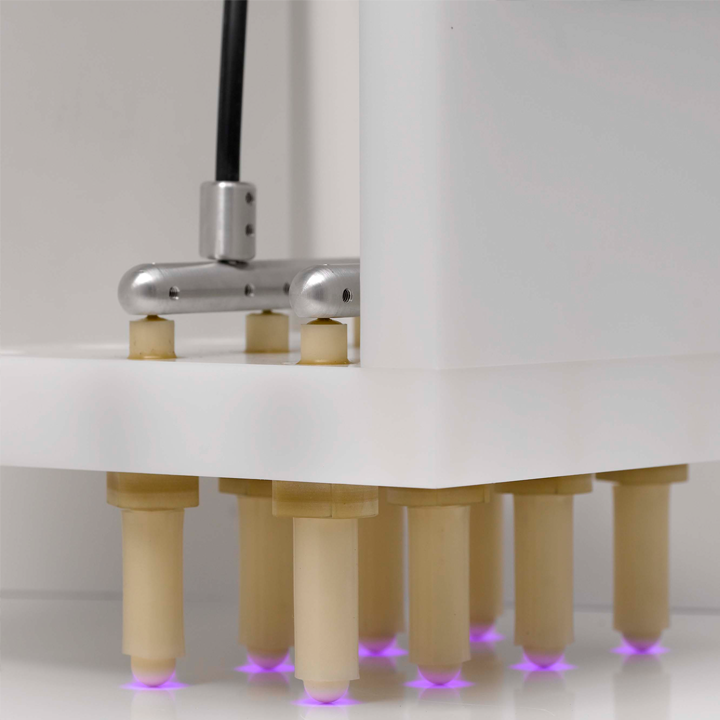
MonTEC Treatment Monitoring
Real-time monitoring of the discharge from individual electrodes in Tantec corona and plasma treaters. Data and alarms can be sent to your PLC or data logging system.
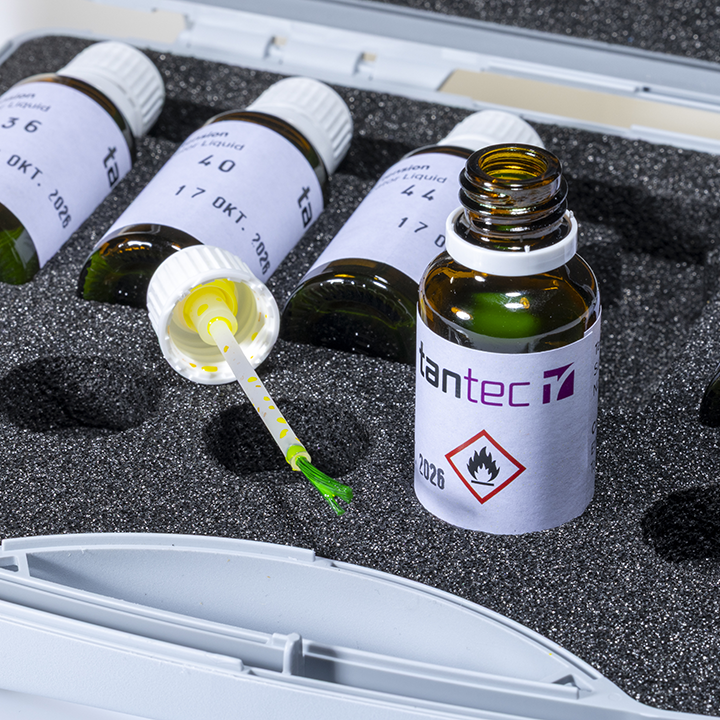
DyneTEC Dyne Testing
Test inks that give a quick indication of a surface’s wetting tension before printing, coating or bonding. A simple production-floor check for treated and untreated surfaces.
Which Quality Monitoring Method Do You Need?
Start with the question your production process must answer.
| Your quality question | Recommended method |
|---|---|
| Is there a microhole or crack in the component? | LeakTEC |
| Did each treatment electrode produce a discharge? | MonTEC |
| Has the surface wettability changed? | DyneTEC |
| Does the adhesive bond meet the required performance? | Application-specific adhesion test |
| Is the surface chemically clean? | Additional surface analysis may be required |
| Do we need production data and traceability? | MonTEC or integrated LeakTEC |
The correct method depends on what your production process must document.
Quality Control Before, During and After Treatment
A controlled surface treatment process can include several verification points. No single measurement gives the complete picture – the strategy should reflect the material, the application and the consequence of a process failure.
Before Treatment
Check the incoming material and surface condition.
- Visual inspection
- Dyne testing
- Contact angle measurement
- Material and batch identification
During Treatment
Monitor that the equipment runs within the defined process parameters.
- MonTEC discharge monitoring
- Generator data and alarm signals
- Line speed monitoring
- PLC data logging
After Treatment
Verify that the surface and final process meet the specification.
- Dyne testing and contact angle
- Tape, peel and pull testing
- Application-specific adhesion testing
- LeakTEC inspection where component integrity matters
Built for Automated Production
Quality control should fit your production – not become a separate manual step. Tantec monitoring and detection systems can be integrated with:
- Conveyor lines, indexing systems and robot cells
- Injection moulding, printing and coating lines
- Automated sorting of failed components
- Main PLC and data logging systems
Signals from the test or monitoring process can flag failed components, stop production or record process data, depending on the configuration.
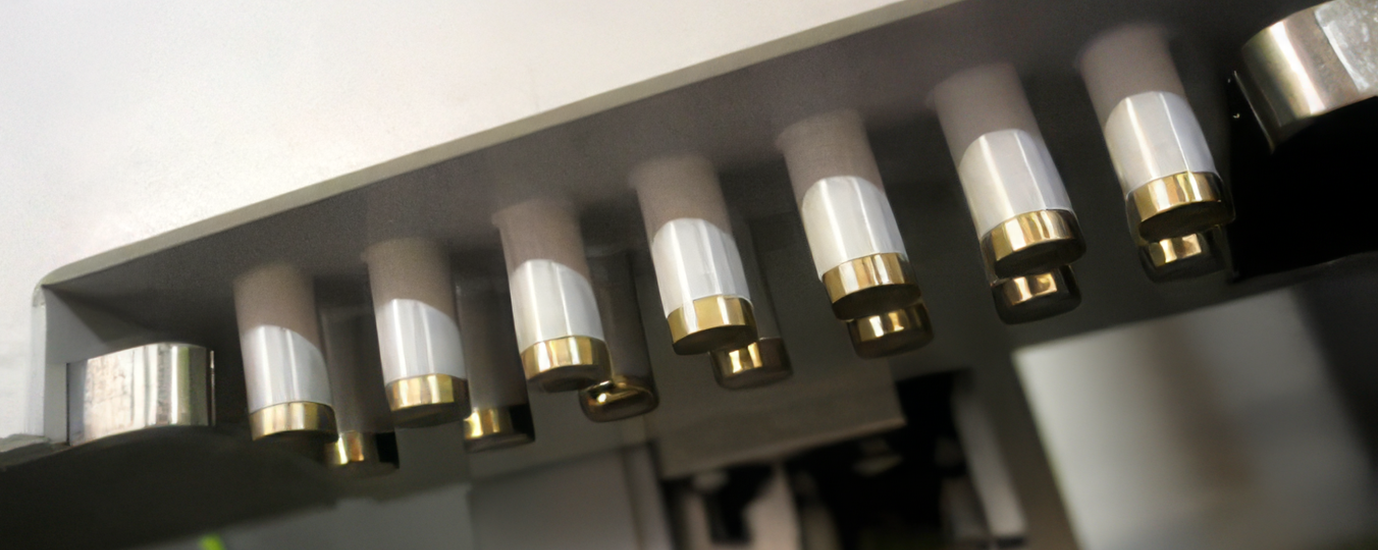
Not Sure Which Method Fits Your Process?
Send us your component and we will test it. Our engineers will recommend the right combination of leak detection, treatment monitoring and surface testing for your production. Or contact our experts directly.
FAQ
What is surface treatment quality monitoring?
Quality monitoring covers the methods used to verify equipment performance, surface wettability and the final result of the next process step. Which measurement you need depends on what must be documented.
What is the difference between MonTEC and DyneTEC?
Does MonTEC measure surface energy?
No. MonTEC monitors the treatment discharge. Surface wettability is evaluated separately using dyne inks or contact angle measurement.
Does a dyne test prove adhesion?
No. A dyne test indicates surface wettability, which is only one factor in adhesion. Final adhesion should be validated with the actual adhesive, ink or coating and an application-specific test.
Can the systems provide traceability?
Yes. MonTEC treatment data can be transferred to a PLC or data logging system, and LeakTEC can provide individual or grouped pass/fail signals. The level of traceability depends on the system configuration.